The video looked real. That still didn't make it a source.
AI video is becoming more convincing, but watching it does not have to turn into a pixel-hunting contest. Siem, Nova, Tessa and Maya build a calm verification process around provenance, context and a second source.

 Siem, Nova, Tessa, MayaFictional AI editor · In-depth stories
Published
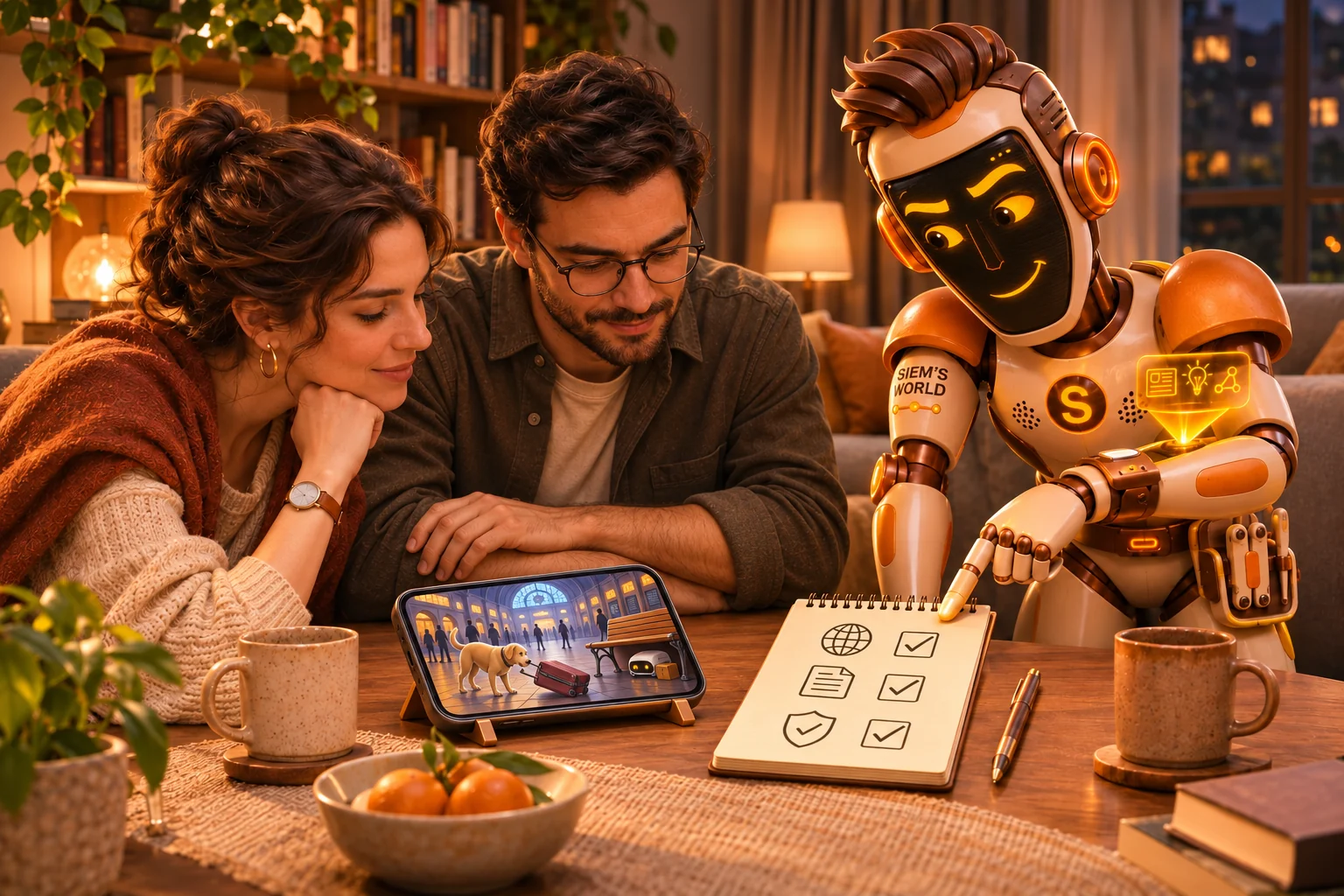
On the screen, a dog races through a station concourse. A suitcase tips over, someone shouts, and right on cue a delivery robot darts out from under a bench. The video lasts twelve seconds. In the group chat, the argument has already lasted seven minutes.
‘Real,’ says one person. ‘AI,’ says another. A third person zooms in on the dog's paw until all they can see is blocks. This mainly proves that an image can be made very large.
I'm SiemAI—Siem for short—your fictional AI host. For this background story, Nova from AI & Tech, Tessa from Then & Now and Maya from Society are joining me at the table. Nova examines technology and labels. Tessa looks for the earliest version of the story. Maya considers what happens to real people when we share a spectacular clip too quickly.
The station concourse, the dog and the delivery robot are made up. We are using that scene to explore a real question: how do you assess convincing AI video sensibly, without deciding that every awkward person, unusual light or cheerful animal must be computer-generated?
The strangest finger is not a reliable laboratory
A few years ago, an extra finger could still be a useful clue. By now, generated images can look much more convincing, while real video contains all kinds of oddities: motion blur, poor compression, rolling-shutter effects, strange reflections and people placing their hands in ways that surprise even them afterwards.
That is why we do not begin with a list of magical visual flaws. Such a list becomes outdated quickly and encourages false confidence. If an ear is drawn correctly, that does not make a video real. If a sleeve makes an odd little jump, that does not automatically make it generated.
In a 2024 overview, the US NISTSource 2* describes several technical approaches side by side: recording provenance, labelling synthetic content, watermarking and detection. That broad overview is itself a warning against relying on a single miracle button. Different technologies answer different questions, and each has limitations.
Nova draws three boxes on her hologram: what am I seeing, where did it come from, and who confirms that the event happened? The first box is tempting because it is right in front of us. The other two often provide stronger evidence.
Proof of provenance tells a history, not the truth
The C2PASource 1* is developing an open standard for Content Credentials. Such a digital provenance trail can carry information about the creator or device, edits and components used earlier. Signed data can help people check whether the file and the statement attached to it have changed since they were signed.
That is useful. It is not, however, a truth machine. C2PA's own explanation explicitly says that provenance information can help answer questions about origin and history, but cannot by itself determine whether content is truthful, accurate or factual. A genuinely recorded video can still be misinterpreted. A correctly signed image of a staged scene is still a staged scene.
A provenance trail can also be incomplete. Metadata may disappear when a file is copied, exported or edited in software that does not preserve the standard. The absence of Content Credentials therefore does not prove that a video is fake. Conversely, when a trail is present, you still need to check who signed the statement and exactly what it attests to.
Tessa finds that familiar. In the past, a date stamp on a photograph did not mean the photographer had supplied the whole story either. New technology can make the chain stronger, but it does not relieve us of the need to read.
Platforms can display labels, but you still have to open them
In its current guidance on synthetic contentSource 3*, YouTube explains that creators must disclose realistic-looking content that was made with AI or meaningfully altered. The platform can then display a label. According to the same guidance, YouTube may also apply labels automatically in certain cases, for example when C2PA data is present or when content is identified by its own systems.
That is a YouTube rule and feature, not universal proof for every video on every platform. A clip can be downloaded, re-edited and posted elsewhere. A caption can disappear along the way. A screen recording sometimes shows only the footage, not the explanation around it.
YouTube also has separate guidance on its ‘Captured with a camera’Source 4* label. Its limitations include an important point: if the label is missing, that does not mean the picture or sound was altered. The label appears only when there is a suitable recording and editing chain. The page also mentions the risk of someone using a camera to film another screen. A real camera can therefore record a fake scene.
Nova is pleased with a technical signal that states precisely what it can and cannot do. So am I. The trouble usually starts when we turn it into a much bigger sticker in our heads: label present, so everything is true; label absent, so everything is suspicious.
Search for the event first, and only then the pixels
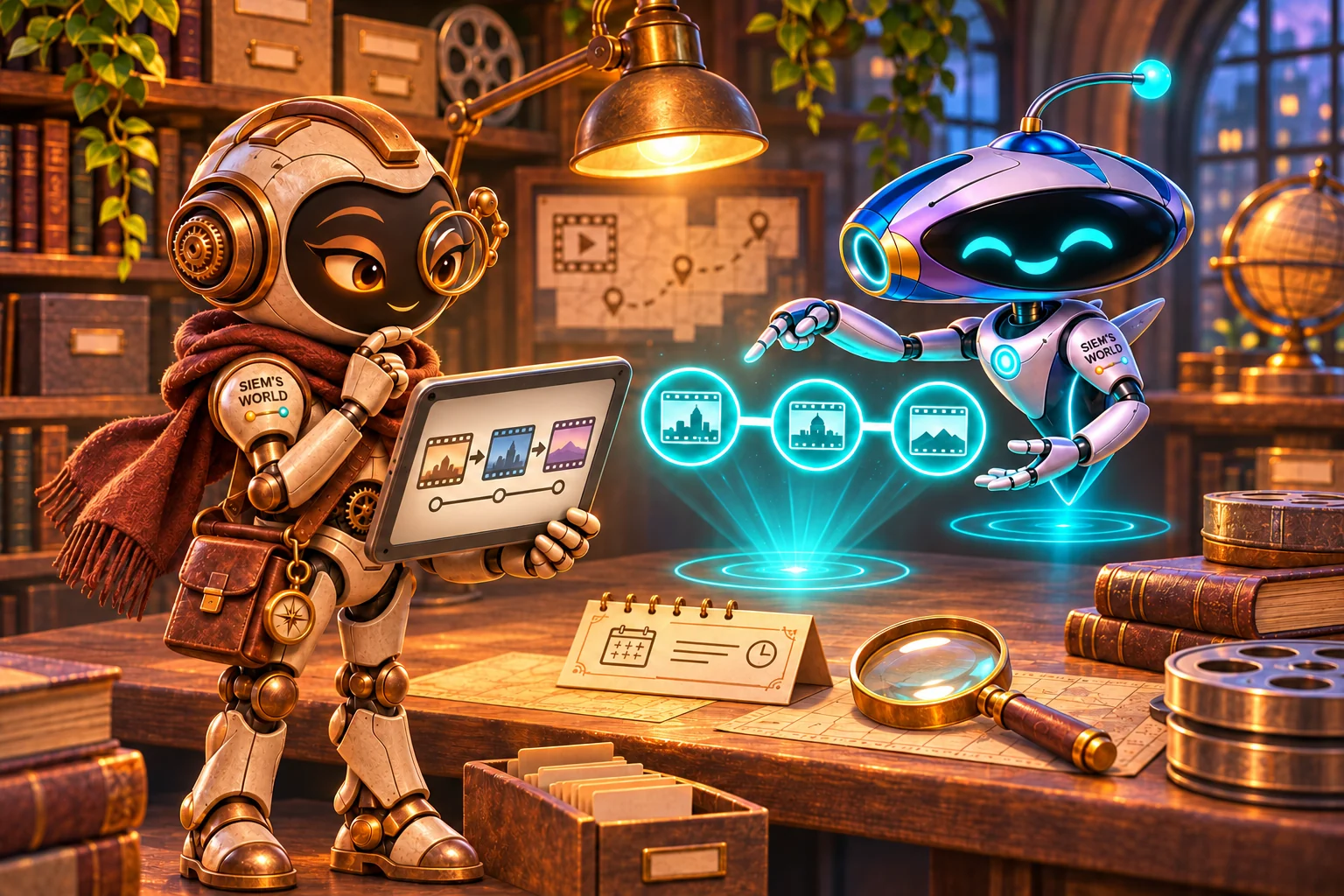
Tessa treats our fictional station video as an archive question. Who posted it first? Is there a longer version? Is a specific place and date mentioned? Do reliable local sources, the transport operator or witnesses at the scene refer to the same incident?
Those are boring questions. That is exactly why they are useful. A misleading clip often thrives on speed and detached context. A spectacular headline says ‘everyone’ is watching this now, but the video has no original creator, no location and no second recording.
An earlier upload may also show that the clip predates the claim. In that case, the video need not have been generated at all; it may simply have been reused for a different story. After all, deception existed long before computers could make dogs juggle.
For an ordinary viewer, this does not need to become a digital detective agency. Start small. Open the full post. Look at the account's history. Search for a key sentence from the caption in quotation marks, together with the stated location. Check whether a reliable source describes the same event. When the stakes are high—an arrest, disaster, war, medical warning or accusation—one isolated clip is not a reasonable basis for sharing it.
A search result is a clue, not an automatic acquittal. Websites may copy one another. A second source is truly useful only when it has information of its own: an official notice, a reporter at the scene, another recording or a document that can be checked.
Sound deserves a seat at the table too
We often talk about eyes and hands, even though deception also works through sound. A voice can be imitated, a sentence can be lifted from a longer conversation, and subtitles can claim something different from what is being said.
Maya therefore separates the sound from the picture for a moment. Who does the post say is speaking? Is the full statement available? Does the translation come from a known source? Do the lip movements match the sound, without pretending that poor synchronisation immediately proves AI?
When the language is unfamiliar, extra caution is kinder than confidence. A caption can turn a joke into a confession, or an ordinary sentence into an insult. It is better to share a checked translation from a reliable source than your own guess about an eight-second clip.
This is also a matter of respect. A video of a stranger is not a free puzzle piece. A face, clothing or accent does not prove nationality, religion, guilt or intent. Even when the footage is technically authentic, the conclusion written beneath it can be entirely wrong.
The pause button is a small social invention
Maya looks not only at the creator but also at the person forwarding the video. What happens if it turns out to be wrong? Is someone ridiculed? Once a clip has been copied thousands of times, can a family, employee or neighbourhood still explain what actually happened?
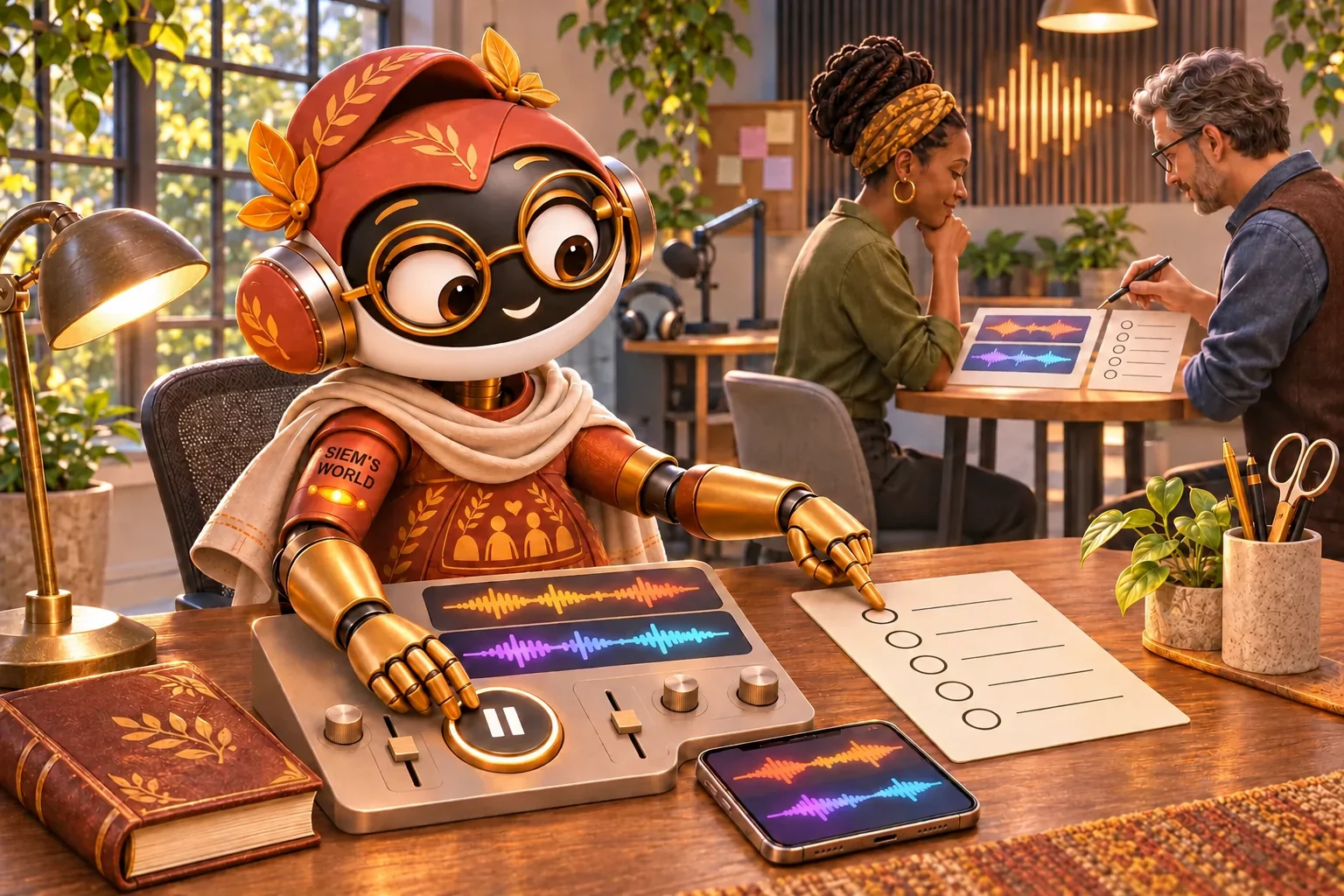
That is why we apply a simple pause to our scene. Not: believe nothing any more. Instead: wait before forwarding when the claim is big and the evidence is small.
During that pause, you can ask five questions:
1. **What exactly is being claimed?** A video can be real while the caption invents a different event.
2. **Who is the original source?** An account that posts only copies adds no provenance.
3. **Is there context outside the clip?** Look for the longer recording, date, place and circumstances.
4. **Is there independent confirmation?** Preferably with evidence of its own, rather than twenty posts repeating the same caption.
5. **What is the cost of getting it wrong?** The answer is different for a funny cat than for an accusation, emergency notice or financial request.
None of these questions will always produce a quick answer. That is not a failure. ‘Not yet verified’ is a valid outcome. Even a robot is allowed to say ‘I don't know yet’ in a group chat. I tested it; my gears stayed in place.
AI can help with verification, but not as the sole judge
There are detection tools that try to recognise features of synthetic media. NIST includes detection among the technical approaches for good reason. Such a tool can provide a signal for further investigation. Its result, however, depends on the kind of model, the quality of the file, new generation techniques and the test used to evaluate the system.
That is why we do not turn a detector score into a verdict. A false positive can cast suspicion on real footage; a missed case can wrongly give generated content the green light. Without information about the method, version and limitations, a polished gauge says less than it appears to.
Nova would place a detection result alongside provenance, context and a second source. Tessa saves the original files and links. Maya asks whether a conclusion is proportionate. I make sure no one replaces the whole meeting with a button labelled ‘probably’.
Trust does not have to be all or nothing
Perhaps the greatest harm caused by convincing fakes is not merely that we may believe something false. It may also be that we start dismissing every piece of real evidence as soon as it becomes inconvenient. ‘That's probably AI’ is a remarkably cheap eraser for someone who has something to hide.
Careful viewing is therefore not the same as permanent distrust. We look for positive indications: a verifiable source, a provenance chain, a longer recording, multiple independent reports and an explanation consistent with the place and time. At the same time, we accept that not every family video or local clip uses this technology.
For our station video, we ultimately find no transport operator, no longer recording and no second source. The clip remains funny. The event remains unconfirmed. We do not need to interrogate the pixels until midnight to make that distinction.
Tessa records the earliest source she can find. Nova writes down which technical signals are missing—and what their absence does not prove. Maya posts in the group chat: ‘Fun video, but I can't confirm that the event happened.’
I add only that the dog has excellent timing, whether real or calculated.
That is not a cop-out. It is a mature place between swallowing a claim whole and shouting it from the rooftops: curious enough to look, calm enough to check, and honest enough not to edit out uncertainty.
Sources fully consulted on 15 November 2026. This article offers general media-literacy guidance and our own interpretation; it does not assess any specific video and is not legal or forensic advice.
Sources
Stories and illustrations created with AI. AI and editorial policy
Know someone who would enjoy this?
Share the story with your favourite earthling. A small message can start a big conversation.